

to self-combust
the ecological function of Leo

This month’s essay continues the exploration of the ecological functions of the zodiac. What are the essential natures of the signs? Where do we see their qualities appearing in nature? What necessary roles do they play in our wider ecologies? This month’s post on Leo is the eleventh in the series; the rest of the series can be found here.
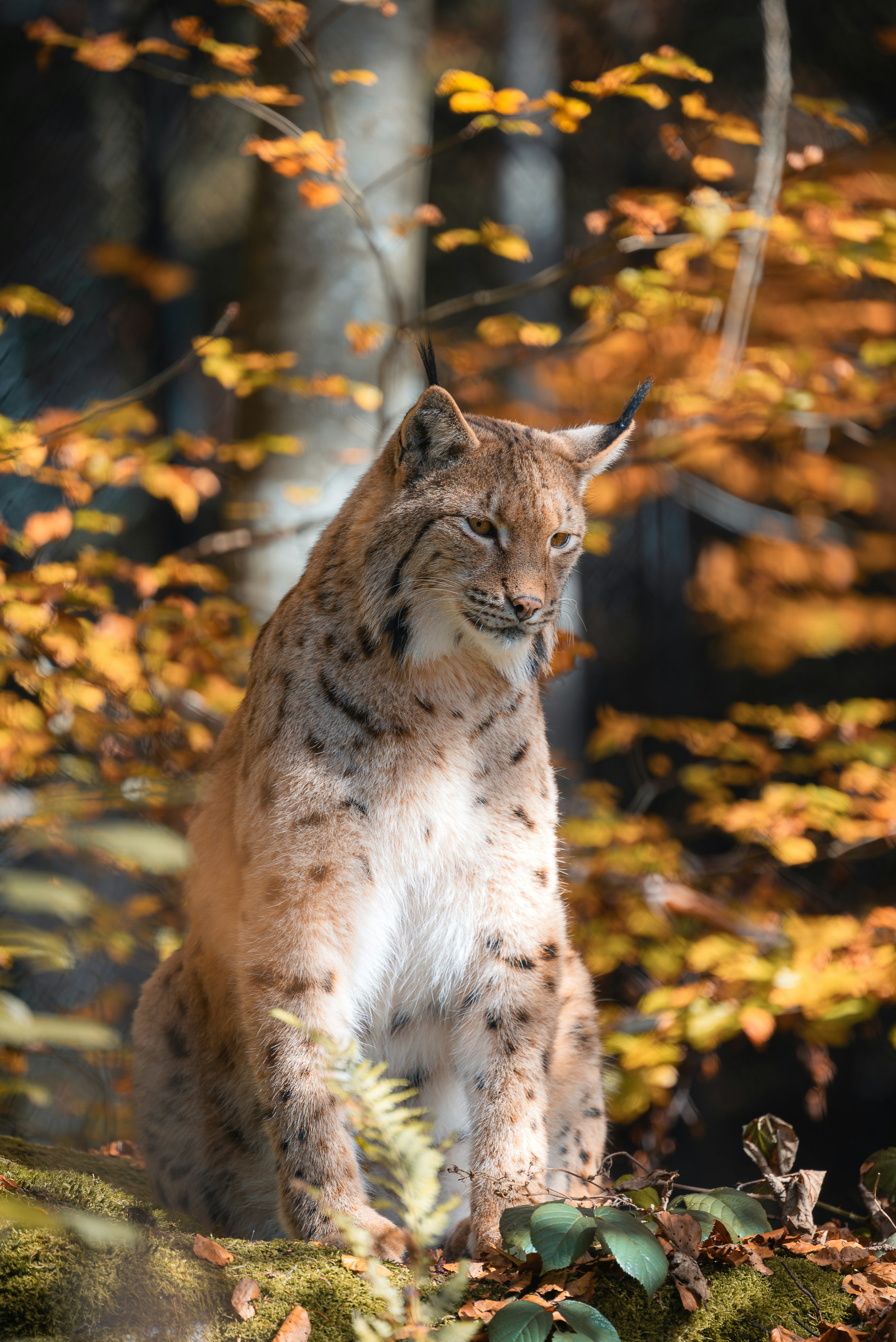
We could think about Leo as the lion, or we could think about Leo as the season from which it sprung. Let us imagine it for a moment:
Looking upon the world, you see that it is green. Everything is growing, is reaching the height of its expression. Crushed bodies of berries lay fermenting beneath the translucent emerald of the long grass, and the autumn fruits grow plump on trees. The early-summer smell of flowers has given way, but still the heady scent of chlorophyll conceals the spreading decay. The youth of the season has matured, only yet on the cusp of decline. Under these dog days of summer, we understand the benign stoicism of the wildcat’s gaze; we let the heat settle upon us like a weight; we stave off nagging flies with the flick of a lazy tail.
And we could leave Leo at that. But we won’t; you were promised an ecological analysis, and you shall get an ecological analysis—because Leo sees things through.
the essential nature of Leo
As always, we’ll form our understanding around the most basic elements of the sign:
its ruler, the Sun, the cosmic king, god of all things eternal and unchanging, such as the soul, and…gold?
its gender, masculine: dynamic, extroverted, action-driven
its element, fire, dramatic, charismatic, impassioned and intuitive
its modality, fixed, unchanging, enduring, associated with the peak expression of the season
And just as we couldn’t think about Cancer without thinking about the moon and the role she plays within our ecologies, so we cannot think about Leo without thinking about the sun. All of the essential qualities of Leo are apparent in the actual body of our solar system’s star: the literal fire, the masculinesque extroversion of light and heat propelled outward from its body—and consider how different this is from the influence of the moon, whose power rests more in what she evokes than in what she directs; it is the gravitational pull of the moon’s own being that moves us, whereas much of the sun’s power is projectile in nature.1 Though of course the gravitational pull of the sun is of extreme significance here too, and this is where we see Leo as a fixed sign: the sun is among the most stable and consistent points in our sky.
Most obviously, the sun as the gravitational anchor of our solar system speaks volumes to the fixedness of Leo (and is directly evocative of the magnetism and self-centeredness that show up sometimes in personality types of this sign); this particular feature of the sun, however, is anachronistic with Hellenistic understanding. The Hellenistic world did not employ a heliocentric model of the universe.2 Instead, they looked to the consistency of its rising and setting, occurring around the same time every day in around the same place on the horizon (allowing for slight seasonal variations, of course). And, unlike the moon, the sun wears the same shape, day after day after day. Leo is generous, steady, reliable; a good provider.
And yet, pop depictions of Leo rarely depict this aspect of the archetype, emphasizing instead the drama, the glamour, the self-centeredness. How do we reconcile such contrasting significations? The answer, perhaps, lies in the body of the sun itself.
the combustion paradox
The life-giving light of the sun is a prime exemplar of the gift economy: that ancient, contract-free exchange of resources which underpins our collective existence. When thinking about the generous nature of Leo, we might think only of the ways we speak of the sun’s energy as “free”—whether it’s the energy which nourishes our food sources, powers our solar batteries, or supplies our bodies with vitamin D. We know the sun is a life-giver by the way tender green things grow toward it. By the way its touch feels upon the face in spring.
And yet the sun isn’t without destructive qualities. Too much exposure to its powerful rays can burn. Planets caught behind its glow are more difficult to see, an astrological condition referred to as “being under the beams” or “combust” (depending on the degree of visibility, or lack thereof). This is a maltreating condition unique to the sun. A planet too close to the sun is said to experience greater difficulty expressing its own significations, in the same way it can be difficult to individuate living beneath another person’s shadow. Solar storms that reach our planet can prove massively destructive, disrupting our communication networks and power grids—and if this doesn’t speak to the unique relationship between the sun and Mercury, our planet of technology and communication, who travels most closely to the sun and is the most common recipient of its overcrowding rays, I don’t know what else can. There’s a reason we don’t consider the sun to be strictly benefic in quality. There’s a reason Leos are sometimes adored, sometimes hated.
How do we read the sun, then, under this light? Where does selfless generosity warp into selfishness? But here’s a more burning question: what do you remember about the time you first learned the sun will die?
I was six years old, in my kindergarten classroom, and it was Matthew Kerper3 who told me. I didn’t believe him in the same way I didn’t believe Allison Matson when she told me I’d go to hell for turning my slices of wonder bread into tightly compressed balls before popping them into my mouth. But unlike Allison, Matthew’s self-righteousness turned inward with my disbelief. He wasn’t trying to make me believe anything; he was just upset that I thought he was lying. I felt that in my blood, and it was my first brush against existential terror.
The sun as we know it operates on a paradox. Its gigantic mass, at the same time that it steadies our solar system into its life-giving orbit, threatens to collapse itself. The only reason it doesn’t collapse is because the amount of pressure within its gaseous body along with the extreme temperatures it produces, work together to fuse hydrogen atoms into helium—a process which results in a massive ongoing release of energy that effectively counterbalances the impulse towards collapse. Its death date is slated for the moment it runs out of fuel. And I think, in some ways, Leo carries this contradiction too—and here is where it’s important to remember that other quality the sun is best known for: illumination.
Perhaps there’s something about this intense pull inward—characterized by the self-focus and magnetism of Leo—taken together with its simultaneous projection outwards—the drama, the glamour, the “performativity”—which serves to illuminate something about the emerging nature of sol/soul. To fix something within a stable orbit, to shine a light upon it until it grows into the pinnacled shape of its essential being, is to know it.4 To free-flowingly project outward from one’s center, noticing where the light bounces around the room, is to know thyself. We call the invisible connections that twine between these knowings ecology.
resources that informed this essay
Brennan, Chris, with guests Jo O’Neill and Nick Dagan Best, “Leo in Astrology: Meaning and Traits,” The Astrology Podcast, July 12, 2022.
Dumke Kimberley and Jackie Rocheleau, The Wise Apple. “The Power of the Sun,” National Geographic, Jan 7, 2026.
Elenbaas, Adam “Ancient Astrology for the Modern Mystic,” Nightlight Astrology, October 2023-May 2024.
Mehta, Jatan. “Solar System History 101,” The Planetary Society, Jan 14, 2021.
Mehta, Jatan and Asa Stahl. “The Sun, Our Solar System’s Star: How the Sun drives space weather, affects life on Earth, and why we study it,” The Planetary Society, 2021 and 2025
National Geographic. “Photosynthesis,” June 15, 2026.
Wacker, Matthias and Michael F. Holick. “Sunlight and Vitamin D: a global perspective for health,” Dermatoendocrinol. Jan 1, 2013
My inconsistent use of pronouns here is totally intentional and also unjustifiably subjective…both Sun and Moon have been gendered in multiple directions across histories and cultures; I’m attached to thinking of the moon as she, but have not come to terms with viewing the sun as either strictly masculine or feminine. We embrace idiosyncrasy here.
At least, there wasn’t a consensus-based heliocentric model employed. There were certain thinkers who played with heliocentric models, but earth-centric models were more commonly used.
Names here have been changed to protect identity.
And if you ever want to feel seen, make friends with a strong-hearted Leo.