

the beavers digest
on sifting summer floods with Venus in Virgo


I’m going to absorb as little of your attention here as possible; consider this introduction a doorway. If I were your grandmother, I might say some magic words: “Once upon a time,” maybe, or “East of the sun, west of the moon…”
Because Czander’s writing always transports me, often deep into the hearts of things (and if you aren’t already following his Substack, I highly recommend doing so). Czander writes into the subterranean, and in today’s guest post, we get right into the belly of Virgo, the very belly of the earth. Rich in image, poetry and layered meaning, this piece will soak through your permeable barriers. Prepare yourselves for an experience: grab a refreshing drink, a nice spot on your porch perhaps, and settle in for the journey.
- Courtney
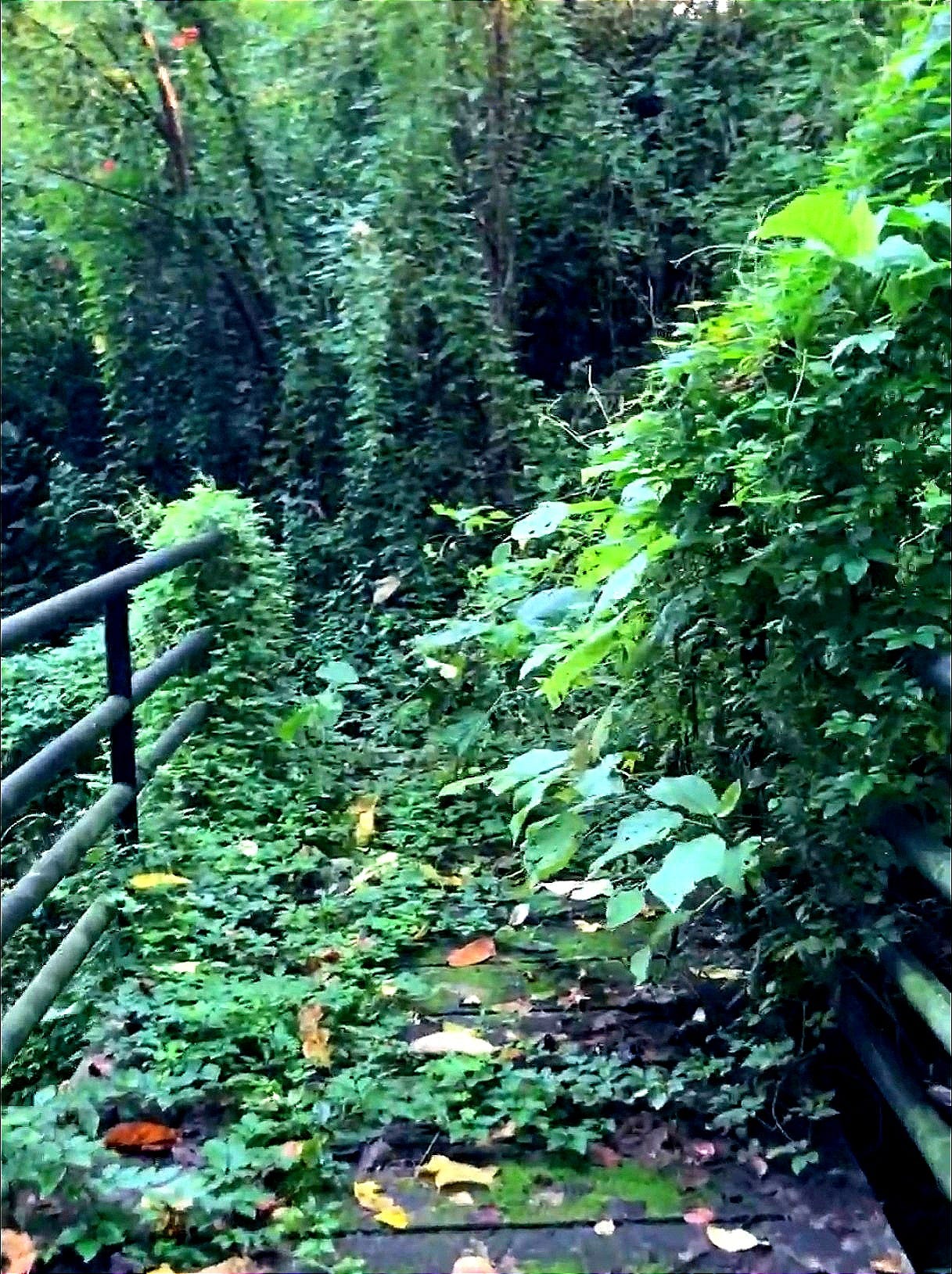
I love the image of manmade structures overgrown with nature. A stone picnic bench consumed by weaver ants and jade vines. An empty neighborhood lot full of brush rabbits and blackberry bushes. A graveyard alive with grass snakes and pomelo trees.
If “trees are poems the earth writes upon the sky,” as a Lebanese poet once wrote,1 then manmade structures overgrown are perhaps essays in embracing. A welcome back into the fold. You belong here too, remember?
Once I sat on a stone bench that was overgrown with vines, and I wanted to be close to this nature. So I closed my eyes and tried to be still and silent, and then the ants crawled on me and began to bite and sting. I tried to breathe through it and focus on anything else, but my skin began to burn, and the itch became a scream, saying “Welcome to nature! You belong here, eaten alive!”
I imagine even the stone bench would eventually be grown through by vines and branches, itched from the inside, gradually cracked and broken down, absorbed back into the jungle. By this process, the stone bench would be part of the life cycle, made alive, eaten alive. Perhaps the earth writes an essay in digestion.
The force that drives the roots into the rock drives my gastric juices; that breaks stone benches down turns mine to bone. And I am dumb to tell a puddle duck the beaver’s dam was built for my own guts. — lines that could have been written by a certain Welsh poet.2
To be eaten by the earth in such a slow way, held so lovingly in her arms, is a romance for the ages. I wonder what it would be like to digest me. What nutrients would return to the earth, beyond my physical body? All these thoughts and emotions that have run through my blood, the entire story of my life and the breaths I’ve inhaled and the harm that I’ve done, the moments I’ve had holding the hands of those I love, the moments I’ve had alone with the trees and the sunset — how are these digested? How would these nourish when they seep back into the celestial soil?
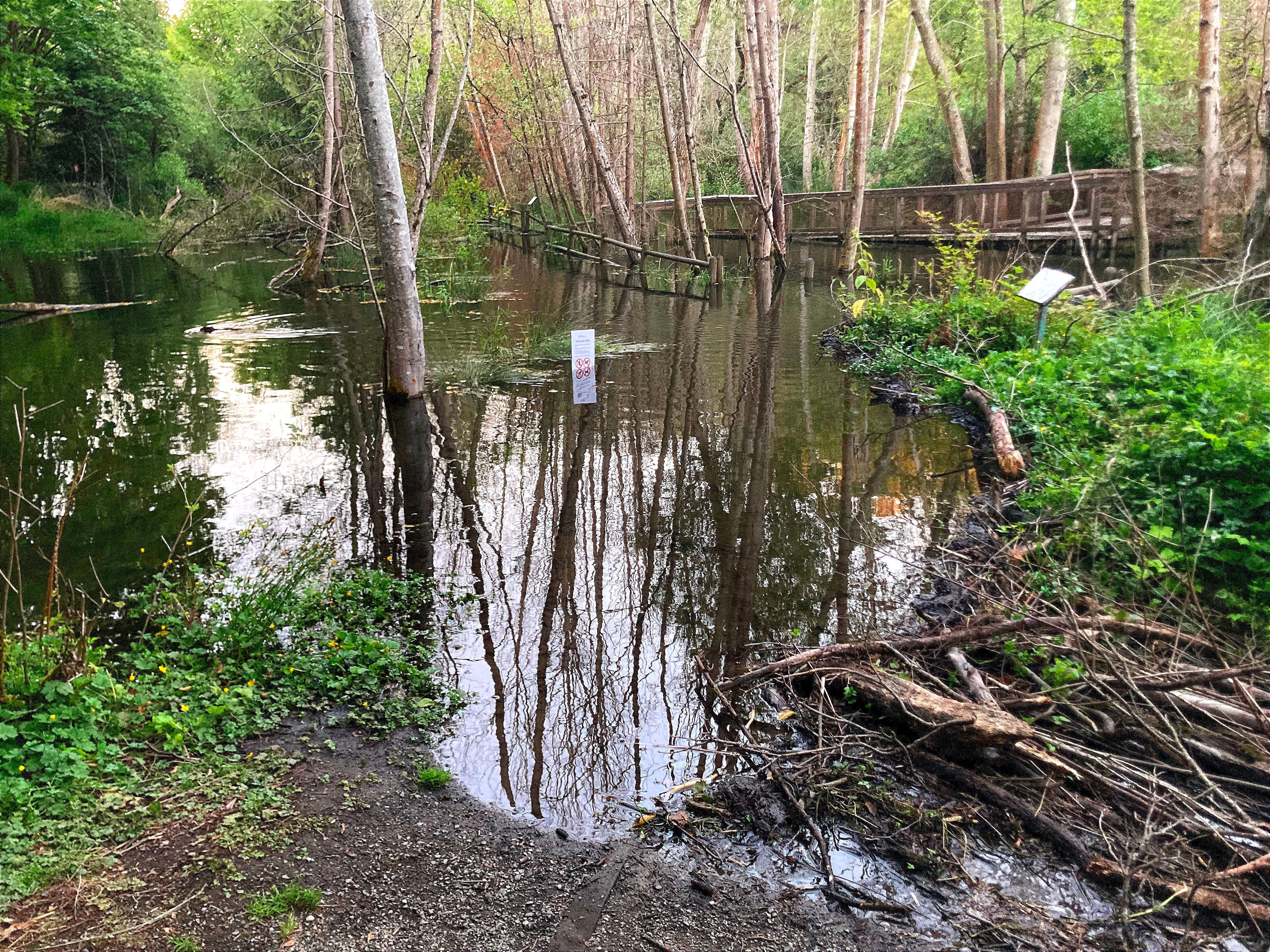
For the past couple months, I’ve been watching the beavers at a creek near my home.
This creek runs through a public park, and the beavers work hard on their dams to maintain the wetland that filters the water before it flows out to the Salish sea. More than a water filter, the wetland is home to ducks and squirrels and all manner of birds, including a blue heron I see from time to time. The dampness of the wetland also provides a refuge against wildfires, an increasing concern here in the Pacific Northwest.
Beyond that still, the ponds and lakes that emerge from beaver dams form environments rich and ripe for certain bacteria and microorganisms to grow. These microbial shifts give rise to a number of ecological processes: nutrient and nitrogen cycling, where excess nitrates in the soil gets processed and released; methane balancing, where a mix of aerobic and anaerobic microbes break plant matter down into methane and consume it, reducing greenhouse gases in the atmosphere; and carbon sequestering, where decay is slowed down to mitigate too much carbon dioxide being released too quickly.
In other words, beaver-dammed wetlands are vital elements of the digestive systems of the earth, managing pollutants and maintaining the microbial gut health of the environment.
Ecologically speaking then, wetlands are essays the earth writes on digestion, where dams punctuate the grammar of the beavers — each stick and branch a letter, carefully carved by the signatures of iron teeth, each blot of inky mud shaped by the brush strokes of leathery tails.
In this particular wetland park, however, what interests me most is that the park itself is being digested by the ever-growing bog, blending and seeping into the habitat. Trails and wooden walkways and observation decks are submerged underwater, inaccessible unless you wore hip waders or brought a canoe.
The hand that whirls the algae into breath stirs the salmon run; that builds the arching bridge devours it whole. And I am dumb to tell a maiden marsh how hopes do not delay the harvest time.
What memories will seep into the earth when the park is finally digested, be it in a decade or ten thousand years? All the steps taken down the walkways, the school field trips, first and fifth dates, family picnics, volunteer work groups picking up litter, summer jazz concerts, heated arguments, solitary walks pondering life decisions, watching the train go by, laughter and I’m sorrys and I love yous, sandwiches, standing still and silent so we could hear the mewls of newborn beaver kits in spring.
This week, Venus entered Virgo, a sign where she finds herself in exile. As one who often seeks to harmonize and bring things together, the Goddess of Beauty and Desire is not quite comfortable in the sign of the harvest, when what was sown will be meticulously reaped with exactness and precision.
As the home and exaltation of Mercury, the planet of intellect and education, the temple of Virgo is often associated with activities of analysis and discernment, harvesting reality from fields of illusion, filtering the truth from polluted streams of consciousness.
Compared to its airy counterpart, however, Virgo is grounded in earthen materiality. The harvesting and filtering arise as matters of fact, ways of knowing rooted in how things move through the body. It’s not surprising then that Virgo governs our digestive system: what we take into our bodies must be broken down and diligently sieved to separate the nutritious from the waste.
The intersection between the culinary and the nutritional is perhaps where Venus could shine in her exile, as a colorful plate often indicates a nourishing plate. Color here is not mere aesthetic, but represents meals of diversity and variety. A diet that harmonizes food across multiple spectra, rich and ripe with fresh fibers, healthy fats, and probiotics, gives rise to a healthy gut microbiome, which in turn supports emotional resilience.
The tension of Venus in Virgo could be the classic conflict between the head and the heart, but all the more presents opportunities to integrate them into wisdom. As our physical bodies discern nourishment and expel the waste, so must our emotional bodies, with our digestive system as a guardian of our hearts. For digestion goes far beyond the food we put in our mouths, our bodies absorbing so much more through contemporary life.
Venus moving into a square with Uranus in Gemini this week reminds us that we are consistently being deluged with flash floods of information and stimulation, everything engineered to pull our attention and hack our dopamine streams. Text messages and emails, devastating news and heart-wrenching stories, click bait, rage bait, ads, streaming services, catered propaganda, influencer snacks, AI vending machines, political sound bites. Social media feeds.
Are you able to digest it all? Or are you being digested in the digital torrents? What wetlands are you building, stick by stick, to slow the flooding down? to filter the waste from what nourishes? to provide a refuge against the wildfires of whiplash? to give space and habitat for all the creatures inside you?
Take a moment to breathe in, listening to your grumbling tummy as much as your rumbling heart, and then breathe out, releasing what you’ve held so tightly in your gut. It takes time to understand, to sift through the flood. It takes time to digest. Take your time to be overgrown again. Be welcomed back into the slow unfold. You belong here too, remember?
The maiden’s lips fall through the garden bed; love reaps the fruit, but its ruby seeds shall bind her soul. And I am dumb to tell the threshing floor to trust the wind to blow the chaff away.
And I am dumb to tell the harvest moon how she begins to eat me up alive.
Born in the Philippines and raised in Singapore, Czander Tan is a video game developer based in the Pacific Northwest region of the United States. He moonlights as an artist, working with the medicines of music, plants, stars, and sometimes words.
from “Sand and Foam” by Kahlil Gibran
in reference to “The force that through the green fuse drives the flower” by Dylan Thomas
 | A guest post by
|
I love overgrown places and thinking about all the things that have happened in a place.... The memories that only the foundations will remember. I'm too tired in this moment to formulate a reaction to this piece, but will sit with your thoughts and let them digest. Thank you.
"To be eaten by the earth in such a slow way, held so lovingly in her arms, is a romance for the ages." This paragraph took me out!
What an evocative piece. I know I'll return to it again.