

mutation as play
the ecological function of Gemini

This month’s essay continues the exploration of the ecological functions of the zodiac. What are the essential natures of the signs? Where do we see their qualities appearing in nature? What necessary roles do they play in our wider ecologies? This month’s post on Gemini is the ninth in the series; the rest of the series can be found here.
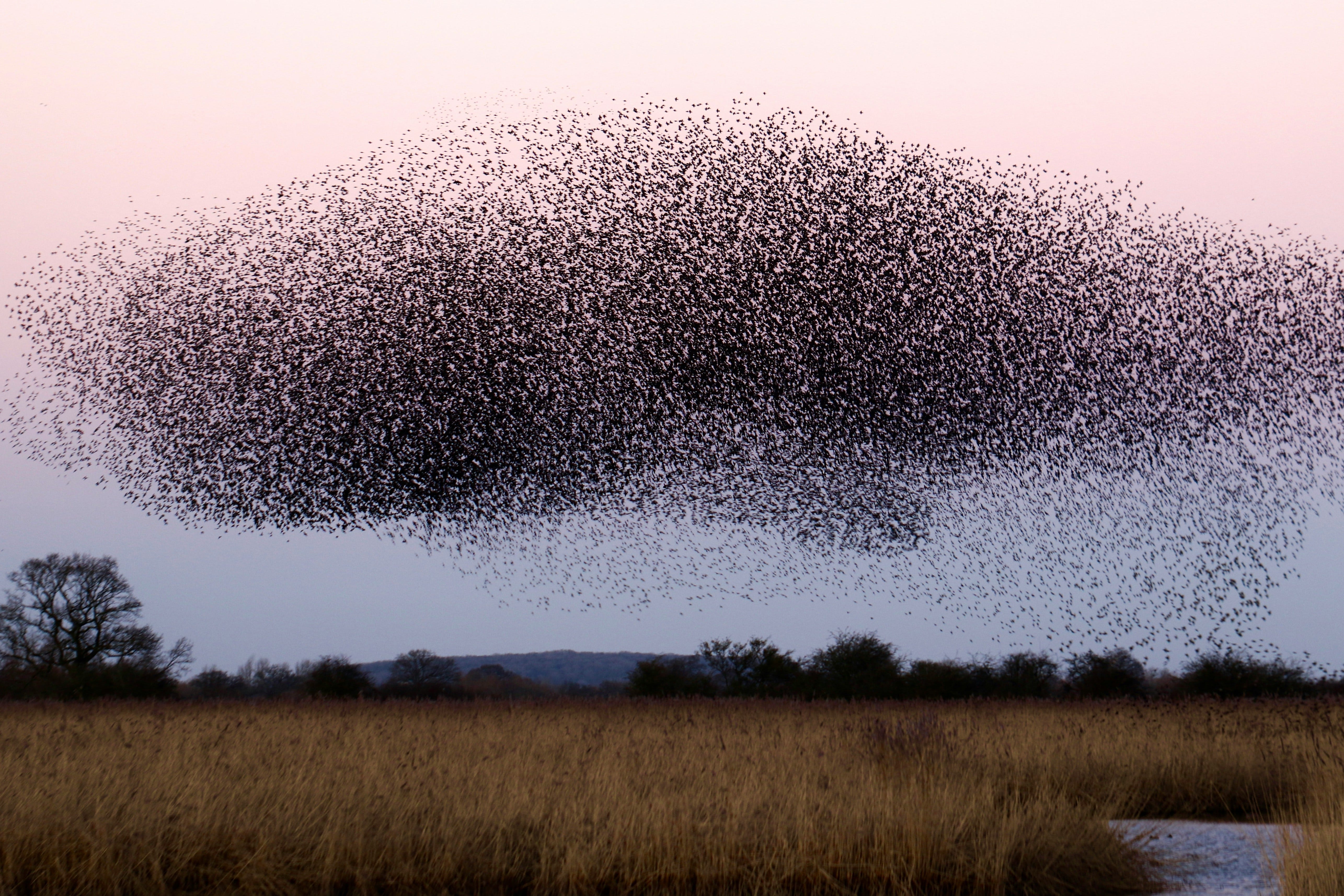
Raise your hand if you associate ecology with words like balance, equilibrium and harmony.
Maybe I’m projecting—given the fact that I can’t actually see your hands—but these are certainly qualities I associate with ecologies. My favorite ecological principle is self-organization: the way that complex, dynamic systems (such as an ecosystem) develop repeating patterns and order over time, seemingly spontaneously.
But what does this have to do with Gemini? Gemini is known for being random, chaotic. There’s a cleverness to Gemini, but we usually see it playing the role of disruptor rather than harmonizer; Gemini is more matchbreaker than matchmaker. Gemini: the great antagonist of ecological systems. Or is it? Let’s break it down.
the essential nature of Gemini
First, our basic understand of Gemini is made up of:
its ruler, Mercury, our messenger god and traveler between worlds; god of alchemy and communication
its gender, masculine: dynamic, extroverted, action-driven
its element, air: social, intellectual, abstract
its modality, double-bodied: expressing a dual/multiplicitous nature
As always, it’s when we begin to weave these pieces together that the archetype comes to life. Putting all of these ingredients in one pot, we understand why, for some people, Gemini is a lot. The changeable nature of both its ruler, Mercury, and its double-bodied modality, evokes quicksilver—yeah, that mercury. Add that to Gemini’s masculine qualities, and you see that these changes are fast and dramatic. The qualities of air give it further dimension: Gemini is gusty, blowing in many different directions. It’s a playful energy; it’s enlivening to be in its presence. But you need to be on your toes, because you never know in which direction your hat is going to sail if you don’t hold it tight to your head.
The multi-directionality of Gemini means it sometimes gets a bad rap, accused of shallowness and a lack of focus. Gemini never stays in one place for very long. But what it lacks in staying power, it makes up for in curiosity. Gemini is inquisitive. And don’t be fooled—just because Gemini jumped so quick from one point to the next doesn’t necessarily mean it didn’t retain what came before: Gemini is like a needle trailing a thread. It’s on this side of the fabric; now that side. All we see is the flash of light, but while we’re attempting to follow the glint of that sharp tip, Gemini has been stitching the disparate pieces together. For Gemini, understanding doesn’t come through deep probing, but as a lightning strike. Electricity doesn’t soak nor flow; it leaps.
And such leaps takes place in our ecologies too.
keepin’ it lively
A Yersinia pestis-ridden flea leaps onto the back of a rat; the rat gnaws a hole into a case of hardtack and slips inside; the case of hardtack leaps between the arms of a cabin boy and cook, and is stored amongst other sea rations aboard a ship. Months and a mysteriously ill-fated voyage later, human and rodent populations, spanning entire continents, drop. So do lead pollution levels.1 Entire ecologies are left utterly changed and reeling.
Alright, fine, yes—this example takes place within the meddling distortion of the Anthropocene, and though I’ve written again and again that we are ecological too, I can understand why some folks might want to see if this principle is truly woven into the heart of natural operations, or if it’s more of a human-specific thing. Gemini is, after all, signified by two (human) twin boys. If we aim to see Gemini represented in the natural world then, let us first seek out Mercury.
Mercury too often feels anthropocentric as far as the gods go: he’s a trickster and an artisan, gifting humanity with its cultural artifacts—instruments for music making; codices for symbolizing thought, words, and sounds; medical knowledge; hermetic philosophy—and he helps souls cross the River Styx to (and from!) the underworld. Essentially, all those things that humanity has long held in its imagination as setting it apart from the natural world.
But if we look very, very closely, we can find Mercury in one of the greatest gifts ever granted us, a gift so old it precedes culture. And while every one of us possesses a unique expression of this gift, the gift itself is not uniquely ours but found in every organism, all the way down to the bacteria, archaea, and single-celled eukaryotes that make up the simplest forms of life here on Earth. Before we ever translated spoken language into the written word, our cells were translating genetic code into bodies.
This is a leap in and of itself: that a strand of DNA might be transposed onto physical form. Our bodies are borne out of primordial language-making.
And just like human language, this genetic code shifts and transforms over time, often abruptly. One small tweak in an organism’s genetic code, and its place in the environment totally shifts. If you have a basic understanding of natural selection’s role in biological evolution, you’ll know about the importance of mutation. Mutations are changes in phenotypic expression that occur seemingly at random. A lineage of black-feathered birds begin to present a streak of red and yellow feathers along its wingtips; a four-legged cetacean returns to the sea and eventually, the legs become flippers. How do such mutations take place?
There’s a sizable gap in our knowledge around mutation sources, though we know some of the causes that contribute to such sudden changes. Radiation, as well as certain chemicals in the environment, may affect the way our genetic codes are transcribed, causing pieces to be omitted, substituted, or duplicated. Transposons, also known as “jumping genes,” might spontaneously change position within a genome, making themselves comfortable in new chromosomal sites at will. Horizontal Gene Transfer (shortened to HGT) describes a process where genetic exchange takes place between organism to organism—sometimes among different species— outside of the normal reproductive inheritance pathway. HGT is rife in the microbial world—the leading cause behind rapidly developing superbacteria—and even takes place occasionally between bacterial colonies and the cells of human bodies.
In all cases, such genetic disruption is as occulted as the Hermetic arts, as trickster-y as that wing-footed god whose first act of being was to steal a herd of Apollo’s most-beloved horses. And mutation, like Gemini, is double-bodied: whether we call it a genetic disorder or a successful adaptation to the environment is entirely dependent on how it impacts the organism’s ability to integrate. The hand of evolution is an ambivalent one.
But such ambivalence isn’t senseless or cruel: it is the primary driver of self-organization; it is the experimenting modality of all life. It’s akin to the sometimes nonsensical play of a child, grasping their way through the things of this world in order to find their place within it. It’s as slipshod and rough as it is lively and intelligent. We take “ambivalent” to mean antipathetic, but this is a false read: ambi + valent break down to mean “many ways.” Not an unfeeling principle then, but a necessary expression of the Ten Thousand Things finding their places in relation to each other amid this vast cosmic dance.
resources that informed this essay:
The course, “Ancient Astrology for the Modern Mystic” taught by Adam Elenbaas at Nightlight Astrology
The podcast episode, “Gemini in Astrology: Meaning in Traits” from The Astrology Podcast, hosted by Chris Brennan with guests Camille Michelle Gray and Nicholas Polimenakos
The article, “Mutations are the Raw Materials of Evolution” by Joel L. Carlin (Department of Biology at Gustavus Adolphus) at nature.com
The lecture, “Random Chance in Evolution,” given by Robin May at Gresham College
The book, The Tangled Tree: A Radical New History of Life by David Quammen
The podcast episode, “Trickster Jumps Sides (Re-Issued for Tricky Times)” from The Emerald, hosted by Joshua Michael Schrei
Ok, this last bit is still largely speculative, but it’s an interesting possibility. You can read more on that here: “The Black Death May Have Had a Surprising Effect on the Environment”